14 published, 0 being written
Every guide
Grouped the way people usually ask: what's common, what's serious, what mixes badly, and what to do before a procedure.
Common
The everyday side effects most people notice, and how long they tend to last.
Reviewed Oct 19, 2026
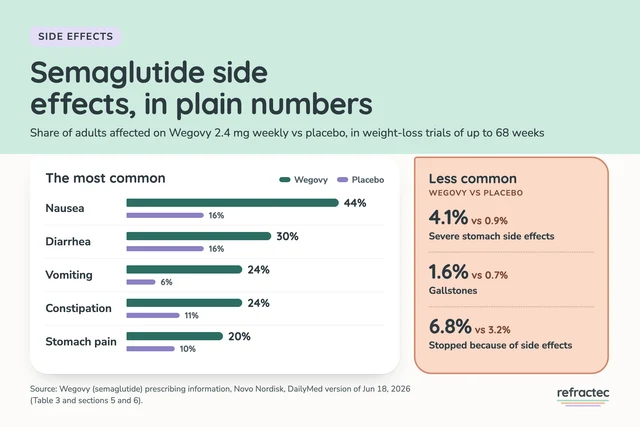
Semaglutide side effects: what's common, what's serious
Nausea and the other everyday effects, the rare warnings, and the signs that mean you should call, all taken from the FDA labels.
Reviewed Oct 19, 2026
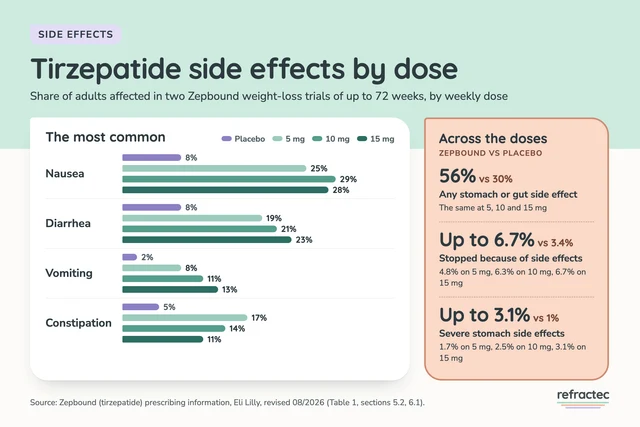
Tirzepatide side effects, dose by dose
Nausea, diarrhea and the other common effects at each dose, the rare warnings, and the 2026 label changes, all taken from the FDA labels.
Reviewed Oct 19, 2026
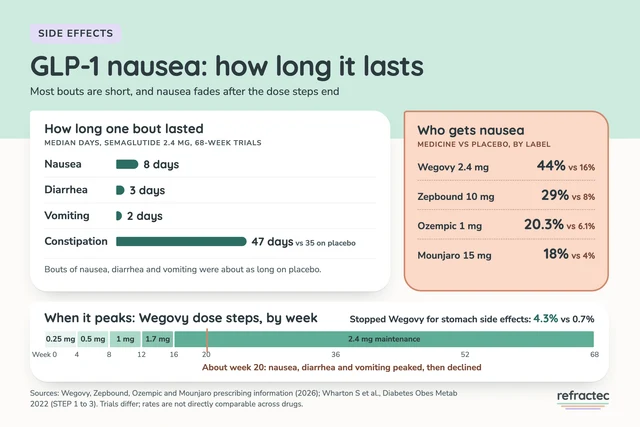
GLP-1 nausea: how long it lasts, and when to call
How often nausea happens on each medicine, why it peaks while the dose goes up, what the labels advise, and the signs that mean it's something more.
Reviewed Oct 19, 2026
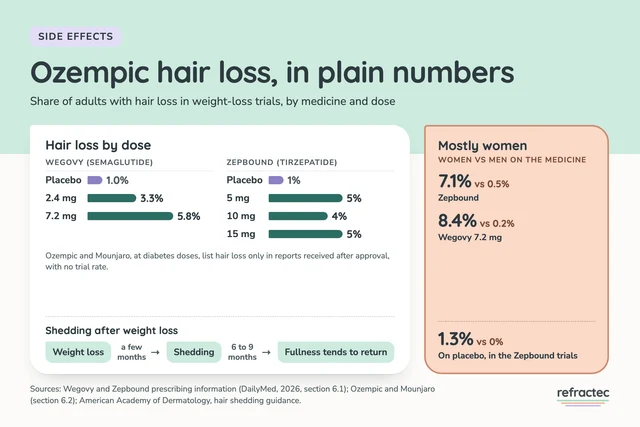
Ozempic hair loss: how common it is, and why weight loss plays a part
What the semaglutide and tirzepatide labels report about hair loss, who notices it most, and what the evidence says about getting your hair back.
Serious
Rare but important warnings, with the signs that mean you should get help.
Reviewed Oct 19, 2026
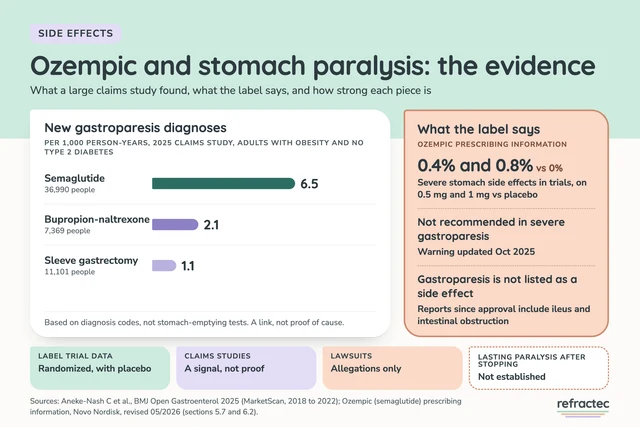
Ozempic and stomach paralysis: what's known, what isn't
The label's wording on severe stomach problems, why semaglutide slows the stomach, what claims-database studies found, and what the lawsuits do and don't show.
Reviewed Oct 19, 2026
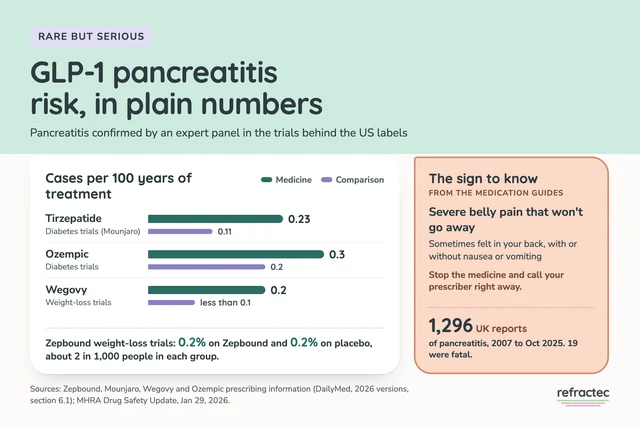
GLP-1 pancreatitis risk: what the trials found, and the signs to know
How often pancreatitis showed up in the trials, why your lipase result may rise, and the belly pain that means you should stop and call.
Reviewed Oct 19, 2026
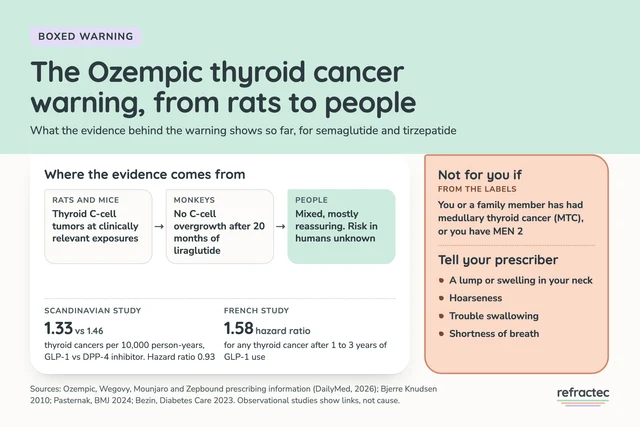
The Ozempic thyroid cancer warning: what it's based on, and what it means for you
Why semaglutide and tirzepatide carry a boxed warning about thyroid tumors, what large studies in people have found, and the neck symptoms to report.
Reviewed Oct 20, 2026
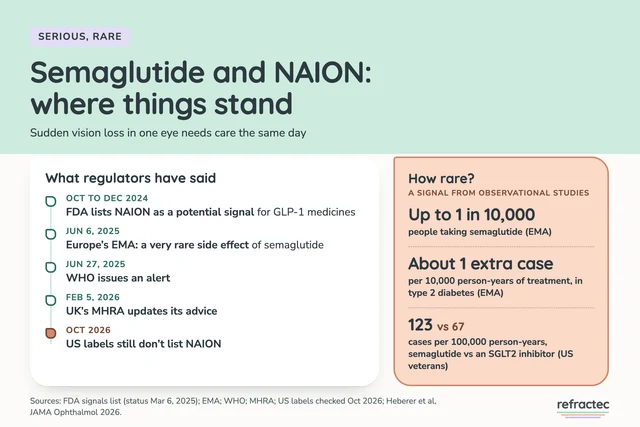
Semaglutide and NAION: what we know about the eye risk
A rare optic nerve condition, a signal from observational studies, and regulators who have read it differently. Here's where things stand in October 2026.
Reviewed Oct 20, 2026
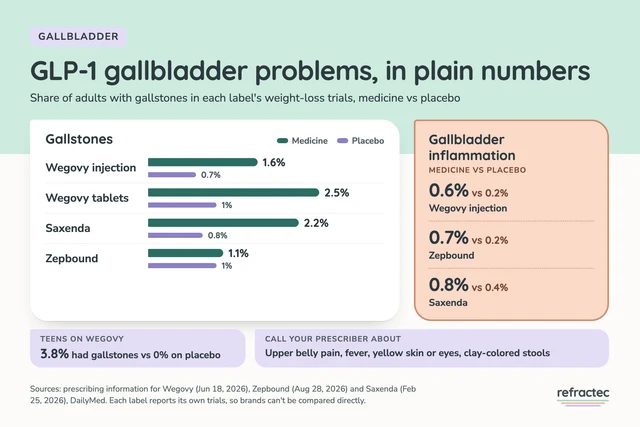
GLP-1 gallbladder problems: how common are gallstones?
What the FDA labels report about gallstones and gallbladder inflammation, how weight loss plays a part, and the signs that mean you should call.
Reviewed Oct 20, 2026
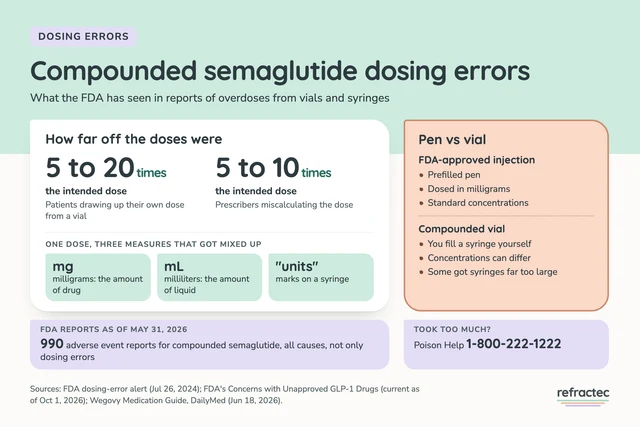
Compounded semaglutide dosing errors: what the FDA has seen
Why measuring your own dose from a vial can go wrong, what the FDA and US poison centers have reported, and who to call if you think you took too much.
Reviewed Oct 20, 2026
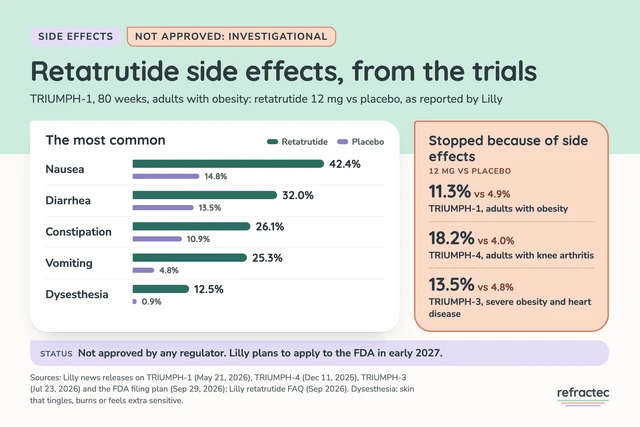
Retatrutide side effects: what the trials have reported
Retatrutide is an investigational drug, not approved anywhere. Here is what its trials have reported about side effects so far, and why products sold online are a different risk.
Interactions
How GLP-1 medicines get along with other medicines, birth control and alcohol.
Reviewed Oct 20, 2026
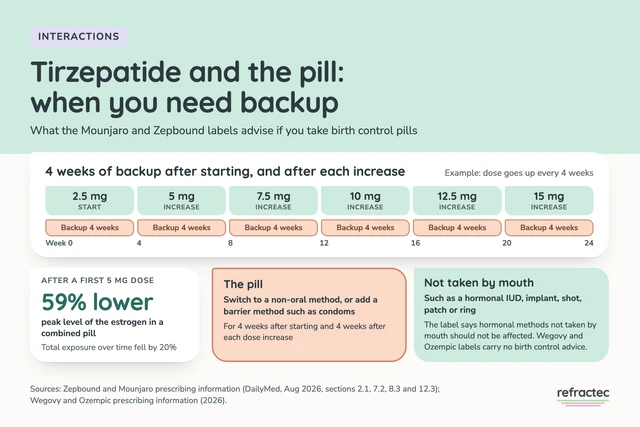
Tirzepatide and birth control: what the label says about the pill
Why tirzepatide can weaken birth control pills, the 4-week backup windows on the label, and what to do if you're vomiting or planning a pregnancy.
Reviewed Oct 20, 2026
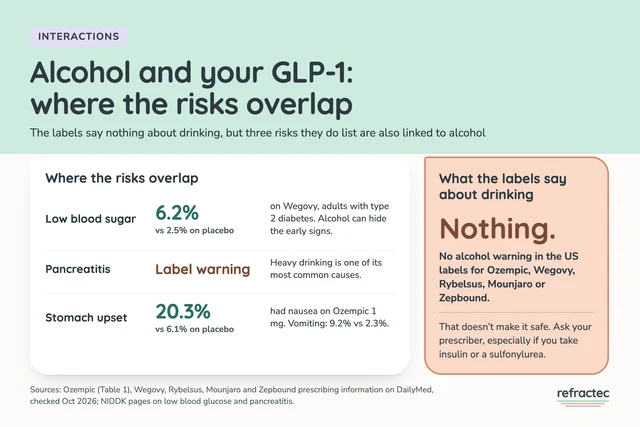
Drinking alcohol on Ozempic or another GLP-1
The labels don't mention alcohol. Here's where drinking overlaps with the risks they do list, and what research says about GLP-1s and the urge to drink.
Procedures
What to tell your care team before surgery, sedation or a scope.